
Something big just shifted in the world of AI. On January 16, 2026, OpenAI officially confirmed what many had been anticipating for months: ads are coming to ChatGPT. Not someday, not maybe – soon. And for anyone working in marketing, this announcement deserves more than a quick skim.
Let’s break it down properly.
A New Tier and a New Business Model
Alongside the ad announcement, OpenAI also launched ChatGPT Go – a new $8/month subscription tier – globally, in every country where ChatGPT is currently available. The plan had already been quietly rolling out since August 2025, starting in India and expanding to 170+ countries before landing in the US this month. It gives users access to GPT-5.2 Instant, more messages, file uploads, image creation, and memory features at a much lower price point than the existing Plus plan.
Now, here’s where it gets interesting for marketers. Ads will initially appear only in the free and Go tiers. Plus, Pro, Business, and Enterprise users? No ads. This is a deliberate freemium structure – not unlike Spotify – where OpenAI keeps its premium subscribers happy while opening up a new revenue channel from its massive free user base.
With over 800 million weekly active users, even a small ad-supported segment is an enormous audience.
What OpenAI Is Promising
OpenAI was unusually direct about the principles guiding their ad approach. Four commitments stand out:
- Answer independence – ads will never influence what ChatGPT tells you. Responses remain based on what’s useful, not what an advertiser wants to surface. Ads will appear separately and always be labeled clearly.
- Conversation privacy – your chats stay private. OpenAI says it will not sell your data to advertisers and won’t share your conversations with them.
- User control – you can turn off personalization and clear your ad data at any time. There will always be a paid, ad-free option available.
- Mission alignment – the entire ad model is framed as a way to keep AI accessible to more people at lower cost, not as a pure revenue grab.
These are strong commitments on paper. Whether they hold up in practice is a fair question, and one the industry will be watching closely.
Why This Matters Beyond OpenAI
This isn’t just an OpenAI story. It’s a signal about where the entire AI industry is heading.
OpenAI achieved a $20 billion annualized revenue run rate by late 2025 and passed 800 million weekly active users – and still, the economics are stretched. The company posted cumulative losses exceeding $13.5 billion in the first half of 2025 alone. When a company of that scale turns to advertising, it tells you something about how difficult it is to sustain this industry on subscriptions alone.
For context, Sam Altman once called ads a “last resort” for ChatGPT back in 2024. By mid-2025, his tone had shifted. By January 2026, the ads are coming.
What the Ads Will Actually Look Like
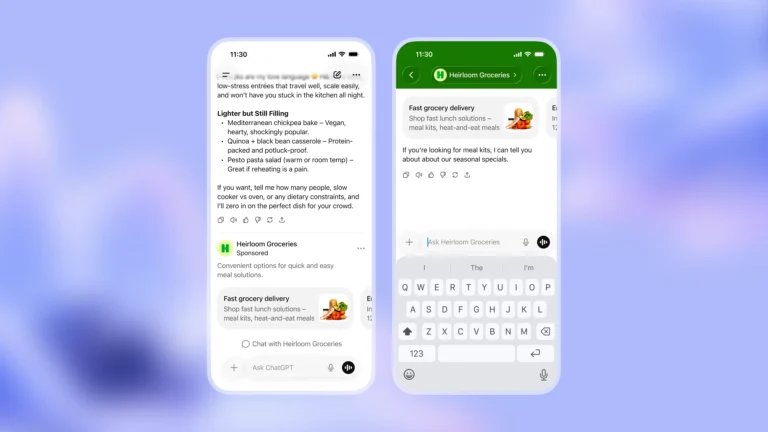
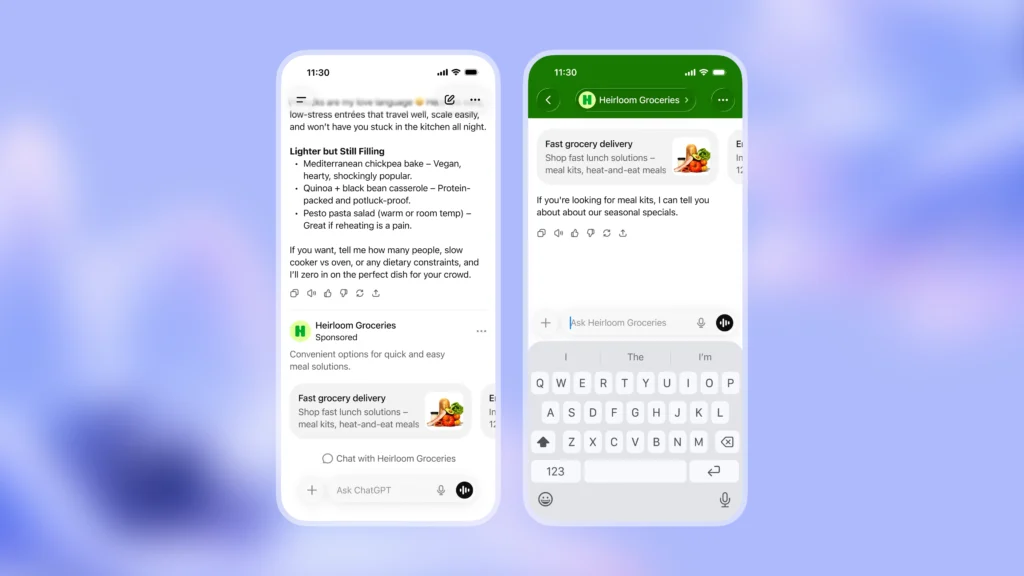
Based on the preview included in OpenAI’s announcement, expect ads to appear at the bottom of responses – contextually matched to what you’re asking about. Think: you ask ChatGPT for travel ideas, an ad for a relevant rental property shows up underneath the answer. Ads appear at the bottom of responses when relevant, won’t influence answers, and will exclude sensitive topics and users under 18.
There’s also a more interesting format being explored: an option to open a direct conversation with a brand’s AI assistant. That second format is where things get genuinely new. It’s not a banner. It’s not a keyword match. It’s a brand-led conversation – which is a fundamentally different kind of advertising interaction.
For now, the testing phase is limited to large advertisers spending over $250,000. This is not yet open to everyone.
What Marketers Should Do With This Information
If your instinct is to wait and see, that’s understandable. The format is still being tested. But this announcement confirms the direction of travel clearly enough to start preparing.
A few things worth thinking about now:
Your brand’s AI presence matters more than ever. As ChatGPT becomes an advertising platform, how your brand, products, and content appear within AI responses will have commercial implications. This is where AI search optimization – sometimes called GEO (Generative Engine Optimization) – becomes a real priority, not a future consideration.
Enterprise clients get a cleaner experience. If you’re running ChatGPT at the organizational level, ads won’t affect you. But your customers using the free tier? Different story.
The conversational ad format is worth studying. The idea that a brand could have its own AI assistant embedded inside ChatGPT responses is genuinely new territory. The brands that figure out how to do this well, and how to make it feel useful rather than intrusive, will have a real advantage.
At BUPZ, we’ll be tracking how this develops and what it means practically for marketers building AI-powered strategies. The full OpenAI announcement is worth reading directly if you want the complete picture.
TL;DR
OpenAI announced on January 16, 2026 that ads are coming to ChatGPT’s free and Go tiers in the US, with testing beginning in the coming weeks. The new $8/month ChatGPT Go plan also launched globally the same day. OpenAI has committed that ads will never influence ChatGPT’s answers, will always be clearly labeled, and that user data will not be sold to advertisers. Premium tiers remain ad-free. With 800 million+ weekly users and growing financial pressure, this move signals a broader industry shift toward ad-supported AI – and marketers should start paying attention now.